





 Guy Prescott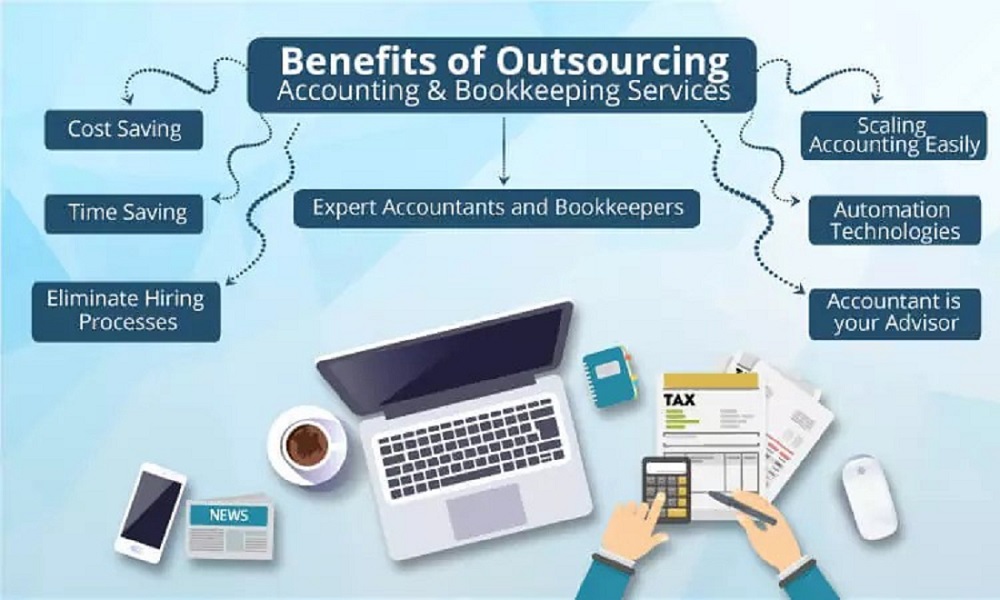
Bookkeeping plays an essential role in managing a business’s finances and ensuring that everything is organized. Traditionally, businesses would handle bookkeeping tasks in-house, relying on their internal staff or hiring dedicated accountants. However, the rise of outsourced bookkeeping has gained popularity among businesses of all sizes due to its many advantages. By choosing to outsource bookkeeping services, companies can experience several benefits that contribute to smoother operations and increased financial efficiency.
Table of Contents
Cost Savings
One of the key benefits of outsourcing bookkeeping is the cost savings it offers. Hiring an in-house bookkeeper or accounting staff can be expensive, as it involves salaries, benefits, office space, training, and equipment. However, when businesses choose to outsource bookkeeping, they avoid these fixed overhead costs. Outsourced bookkeeping services typically charge a flat fee or hourly rate, which is often lower than the cost of employing a full-time bookkeeper. This allows businesses to allocate their resources more efficiently and save money in the long term.
Access to Expertise
When businesses opt to outsource bookkeeping, they gain access to specialized knowledge and expertise. Outsourced bookkeepers are usually highly skilled professionals with extensive experience in handling financial data, tax regulations, and financial reporting. By leveraging their expertise, businesses can ensure their financial records are accurate, up-to-date, and compliant with relevant laws. An experienced outsource bookkeeper is also better equipped to offer insights into tax strategies, financial planning, and budgeting, helping businesses make informed decisions that improve profitability.
Increased Efficiency and Time Savings
Outsourcing bookkeeping allows businesses to focus on their core operations, rather than spending time managing financial records. When an experienced outsource bookkeeper is handling the bookkeeping tasks, business owners and managers can devote more time to strategy, customer relations, and growth. Additionally, outsourced bookkeeping services often use the latest technology and accounting software, enabling faster and more accurate processing of financial data. This helps businesses avoid delays, reduce the risk of errors, and keep their financial records organized.
Scalability and Flexibility
Another significant advantage of outsourced bookkeeping is the scalability and flexibility it provides. As businesses grow or experience seasonal fluctuations, their bookkeeping needs can change. Outsourcing allows companies to easily scale up or down without the need to hire or lay off in-house staff. Whether the business requires additional support during tax season or needs fewer resources during slower months, outsourced bookkeeping services can adapt to these changes quickly. This flexibility ensures that the business can maintain a streamlined financial management process without being burdened by unnecessary overhead.
Risk Mitigation and Compliance
Managing compliance with tax laws, labor regulations, and accounting standards can be complex and time-consuming. When businesses outsource bookkeeping, they reduce the risk of non-compliance and penalties, as outsourced bookkeepers stay updated on the latest regulations and standards. Outsourced bookkeeping services also implement rigorous internal controls and perform regular audits to ensure accuracy and transparency in financial reporting. This helps businesses maintain a higher level of compliance and reduce the likelihood of costly errors.
Improved Cash Flow Management
Cash flow is a critical factor in the success of any business, and efficient cash flow management is crucial. By outsourcing bookkeeping services, businesses gain better control over their cash flow. An outsourced bookkeeper can provide detailed financial reports, track accounts payable and receivable, and help identify potential cash flow issues before they become problematic. This proactive approach helps businesses maintain a steady cash flow, avoid late payments, and ensure they have enough funds to cover operational costs.
Access to the Latest Technology
Outsourced bookkeeping services often leverage advanced accounting software and tools to manage financial data. These technologies provide real-time reporting, automated processes, and accurate data entry. By outsourcing bookkeeping, businesses can gain access to the latest technology without having to invest in expensive software or training. This not only enhances the accuracy and efficiency of financial management but also enables businesses to make data-driven decisions based on up-to-date financial information.
Focus on Core Business Functions
Outsourcing bookkeeping allows businesses to focus on what they do best – running their operations and serving their customers. Instead of being bogged down by administrative tasks, such as maintaining ledgers, reconciling accounts, or preparing tax filings, business owners can concentrate on growing their business, improving customer experience, and developing new products or services. By delegating bookkeeping responsibilities to an experienced outsource bookkeeper, business leaders can achieve a better work-life balance and increase their overall productivity.

Enhanced Accuracy and Reduced Errors
Handling bookkeeping in-house can lead to mistakes, especially when employees are juggling multiple responsibilities. Even small errors in financial records can lead to significant consequences, such as misreporting taxes or overspending. Outsourcing bookkeeping ensures that financial data is handled by trained professionals who are highly proficient in maintaining accuracy. These bookkeepers use established systems and checks to minimize errors and ensure that all financial reports are correct. This significantly reduces the risk of costly mistakes and improves the reliability of financial records.
Confidentiality and Data Security
Confidentiality is crucial when it comes to financial data. Outsourced bookkeeping services typically have strict data security protocols in place to protect sensitive financial information. These professionals use secure systems to store and transmit data, reducing the risk of fraud or theft. Moreover, outsourcing to a reputable company ensures that all financial data is handled in compliance with privacy laws and regulations, giving business owners peace of mind that their financial information is safe and secure.
Conclusion
Outsourcing bookkeeping can provide businesses with significant advantages, including cost savings, access to expert knowledge, increased efficiency, and improved accuracy. By opting for outsourced bookkeeping services, companies can focus on their core operations and make informed financial decisions with the help of experienced professionals. Whether you’re a small business owner or managing a larger company, outsourcing bookkeeping can streamline your financial processes and set the stage for long-term success.
FAQs
Q. What are outsourced bookkeeping services?
Outsourced bookkeeping services involve hiring a third-party company or individual to manage a business’s financial records. This includes tasks such as bookkeeping, financial reporting, payroll, and tax preparation, among others.
Q. How can outsourcing bookkeeping save money?
Outsourcing bookkeeping eliminates the need for hiring full-time in-house staff, thus saving on salaries, benefits, and overhead costs. Additionally, businesses only pay for the services they need, which can be more cost-effective than maintaining an internal bookkeeping department.
Q. Is outsourced bookkeeping suitable for small businesses?
Yes, outsourced bookkeeping is highly beneficial for small businesses. It allows them to access expert financial services without the need to hire full-time staff. It also helps small businesses focus on growth and efficiency while keeping costs low.
Q. What should I look for in an outsource bookkeeper?
When choosing an outsourced bookkeeper, look for someone with experience in your industry, expertise in relevant accounting software, and a strong reputation for reliability and accuracy. It’s also important to ensure they follow best practices for data security and confidentiality.
Q. How do outsourced bookkeeping services improve cash flow?
Outsourced bookkeeping services track income and expenses, manage accounts payable and receivable, and provide financial reports that help businesses monitor their cash flow. By identifying potential issues early, businesses can take proactive steps to maintain a healthy cash flow.
About Author
